
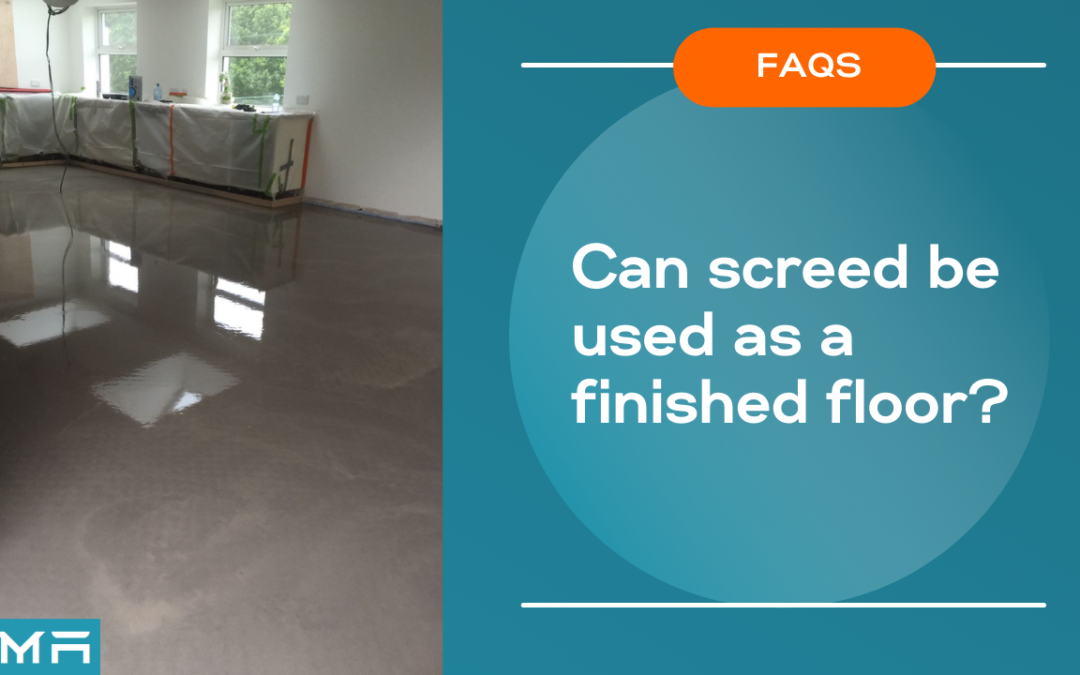
Screed is normally used as a base layer for flooring such as tiles, wood, vinyl, or carpet. Its main purpose is to create a smooth, level surface ready for a final floor finish.
However, in some situations screed can be used as the finished floor itself, provided it is properly sealed or coated. This approach is sometimes used in modern residential interiors or commercial spaces where a simple, industrial style floor is desired.
Across London and the South East, screeded floors are usually finished with another flooring material, but there are cases where the screed surface remains visible.
Why screed is usually not the final surface
Standard screed is not designed to act as a finished wearing surface. It can be porous, may stain easily, and can wear down over time if left untreated.
Without protection, screed may also produce dust and absorb moisture, which can affect durability and appearance.
This is why most projects install a final floor covering once the screed has cured.
When screed can be used as a finished floor
In some projects, screed can remain visible if a protective coating is applied. Common examples include:
Polished screed finishes
Resin coated screed floors
Sealed concrete style floors in modern interiors
These finishes protect the surface and improve durability while maintaining a minimalist appearance.
Commercial spaces, workshops, and certain contemporary homes sometimes use this approach.
Things to consider before leaving screed exposed
If screed is intended to be the final floor surface, the installation must be carried out with greater precision than standard screeding.
Surface flatness, curing, and finishing become much more important because any imperfections will remain visible.
Additional sealing or coating is usually required to improve durability and protect the floor from staining or moisture.
Screed and underfloor heating
Many screeded floors are installed over underfloor heating systems. In most homes, the screed acts as a heat distributing layer and is then covered with tiles, wood, or vinyl flooring.
Leaving the screed exposed is less common in these situations because many floor finishes improve comfort and durability.
If you are deciding between screed types, our guide on liquid screed vs traditional screed cost in the UK explains the differences and when each system is typically used.
Why professional screeding matters
If screed will remain visible as the finished floor, installation quality becomes even more important.
Uneven surfaces, poor curing, or incorrect mix ratios can lead to cracks or surface defects that are difficult to correct later.
Experienced screeders focus on preparation, accurate levelling, and proper curing to achieve the best possible result.
If you are planning a flooring project in London or the South East and want advice on the best screed solution for your floor, the LMA Floorscreeding team can help.
We provide clear guidance and straightforward quotes so you know exactly what to expect.