
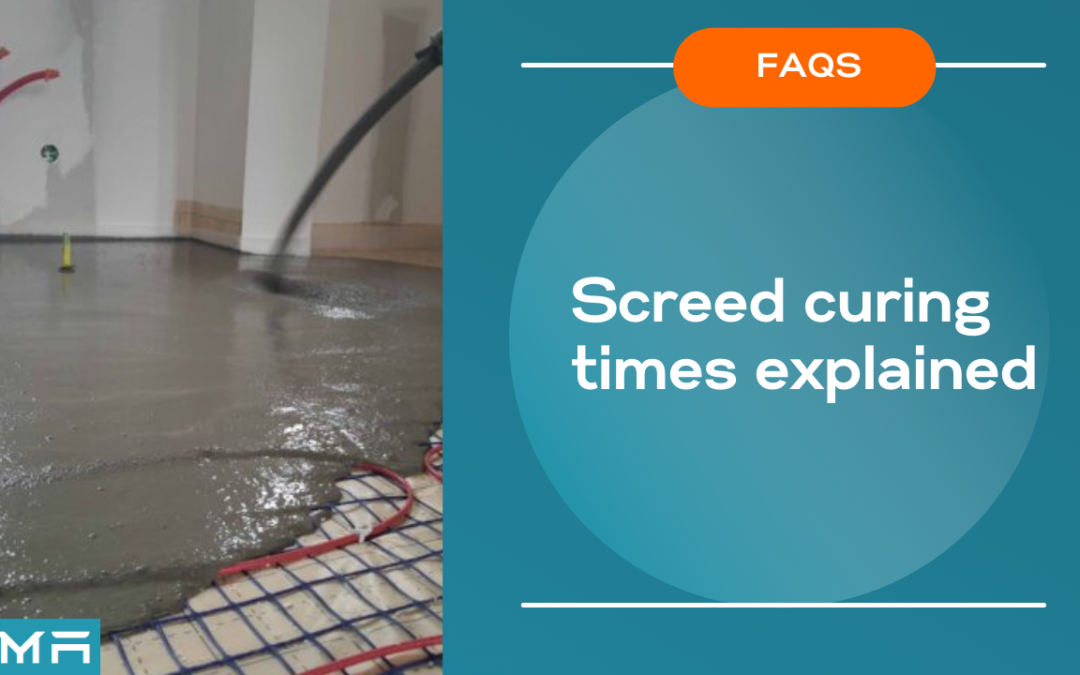
Screed curing time is one of the most important factors in any flooring project. Installing floor finishes too early can trap moisture and lead to cracked tiles, lifting floors, or adhesive failure.
Across London and the South East, screed is commonly used in new builds, extensions, and refurbishment projects to create a smooth, level base for final flooring.
Understanding how long screed takes to cure helps ensure the floor performs properly once the finished surface is installed.
What curing actually means
Curing refers to the process where screed gains strength and moisture gradually evaporates from the material.
Even though screed may appear dry on the surface, moisture can remain trapped inside the floor. If flooring is installed before this moisture has reduced to acceptable levels, it can damage adhesives and floor coverings.
This is why proper curing time is essential before installing tiles, wood, vinyl, or carpet.
Traditional screed curing times
Traditional sand and cement screed generally dries at a rate of around one day per millimetre of thickness under normal conditions.
For example:
50mm screed may require around 50 days to fully dry
75mm screed may require several months before certain finishes are installed
Environmental conditions such as temperature, humidity, and airflow can affect these drying times.
Traditional screed remains a reliable option for many projects but usually requires longer curing periods.
Liquid screed drying times
Liquid screed often dries faster and more consistently than traditional screed.
Some liquid screed systems allow light foot traffic within 24 to 48 hours, although full drying before floor finishes can still take several weeks depending on thickness and site conditions.
Liquid screed is commonly used in London extensions and new builds where large open floor areas require a smooth, consistent finish.
Factors that affect screed curing
Several factors can influence how quickly screed dries:
Screed thickness
Room temperature and ventilation
Humidity levels
Type of screed used
Presence of underfloor heating
Underfloor heating systems are often used later in the drying process to help reduce moisture gradually.
Why rushing screed drying causes problems
Attempting to speed up the curing process can lead to cracking, curling, or weak screed surfaces.
Floor finishes installed too early may trap moisture inside the screed, which can damage adhesives and cause flooring to lift.
Moisture testing is often recommended before installing final floor coverings.
If you are comparing screed options, our guide on liquid screed vs traditional screed cost in the UK explains how drying times can affect project timelines.
Why professional screed installation matters
Experienced screeders understand the importance of correct curing and moisture control.
Proper preparation, accurate mixing, and controlled drying help ensure the screed achieves its full strength and provides a reliable base for the final floor finish.
This is particularly important in kitchens, extensions, and open plan living spaces where floor performance is critical.
If you are planning a screeding project in London or the South East and want clear guidance on curing times and the best screed system for your floor, the LMA Floorscreeding team can help.
We provide practical advice and clear quotes so you understand the best approach for your project.