
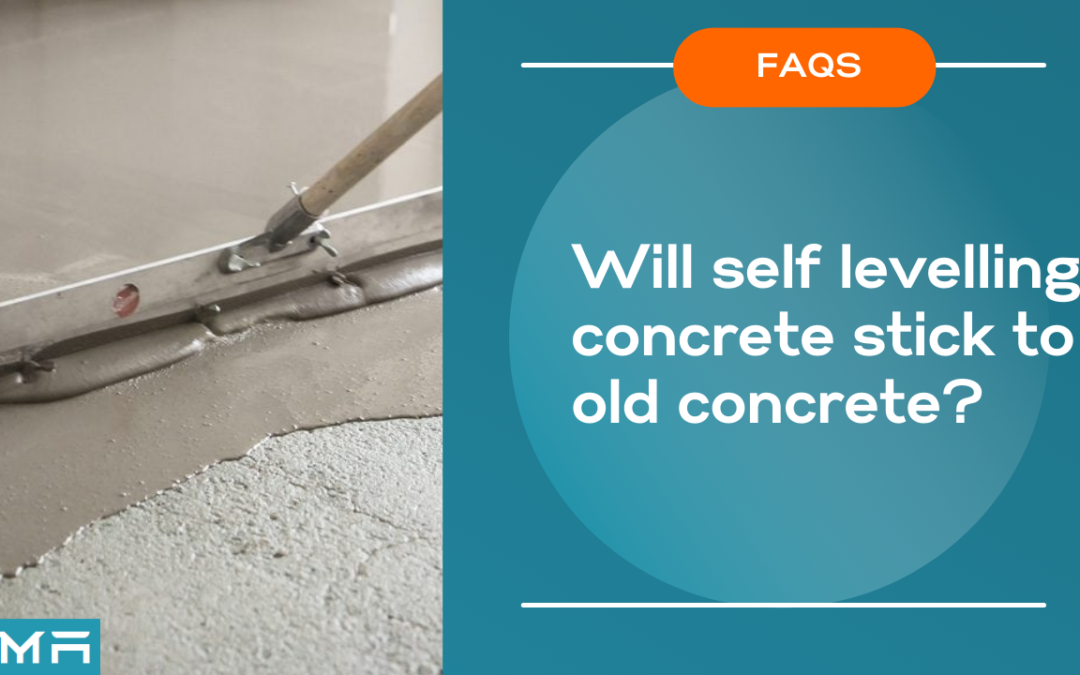
Yes, self levelling concrete can stick to old concrete, but only if the surface is properly prepared. In many refurbishment projects across London and the South East, levelling compounds are used to correct uneven concrete floors before installing tiles, wood, or vinyl flooring.
Without correct preparation, however, the levelling layer may fail to bond properly and can crack, lift, or separate from the base.
Understanding how old concrete should be prepared is key to achieving a reliable result.
Condition of the existing concrete
The existing concrete must be solid and stable before self levelling compound is applied.
If the concrete is cracked, loose, or crumbling, the levelling layer will simply follow those weaknesses and may fail over time. Any damaged areas should be repaired before levelling begins.
Old concrete floors in London properties often require patch repairs before a levelling product is installed.
Cleaning the surface
One of the most common reasons levelling compounds fail is poor surface cleaning.
The concrete must be free from:
Dust
Oil or grease
Paint or old adhesives
Loose debris
These contaminants can prevent the levelling compound bonding correctly to the surface.
Mechanical cleaning, such as grinding or sanding, is often used to expose clean concrete and improve adhesion.
Using the correct primer
Most self levelling products require a primer to be applied before installation.
Primer helps seal the concrete surface, improves bonding, and prevents the levelling compound from drying too quickly. Skipping this step can lead to weak bonding and uneven curing.
The correct primer depends on the specific levelling product being used.
Checking moisture levels
Older concrete floors can contain trapped moisture, particularly on ground floors without an effective damp proof membrane.
If moisture levels are too high, the levelling compound may not cure properly and can develop powdery surfaces or bonding issues.
Moisture testing is often recommended before installing levelling products.
When self levelling may not be suitable
Self levelling concrete works well for correcting minor surface imperfections. However, it is not designed to fix major level differences or structural problems in the floor.
If the concrete requires significant build up, traditional screed or liquid screed may be the better option. Our guide on self levelling compound vs screed explains when each system should be used.
Why preparation matters
When old concrete is properly cleaned, primed, and stable, self levelling concrete can bond extremely well and create a smooth surface ready for floor finishes.
Most failures occur because preparation steps are rushed or skipped.
Experienced screeding teams focus heavily on preparation to ensure long lasting results.
If you are planning a flooring project in London or the South East and want to level an existing concrete floor, the LMA Floorscreeding team can help.
We provide clear advice, practical solutions, and straightforward quotes so you know exactly what to expect.
Visit our homepage to learn more about our services and contact us today!