
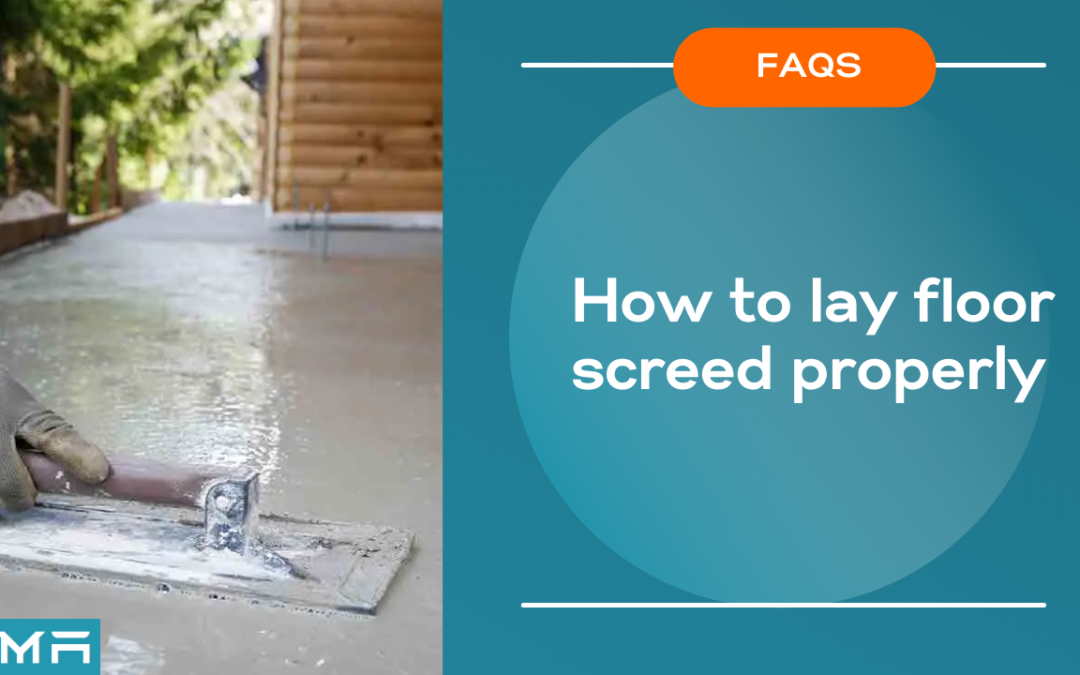
Floor screed is used to create a smooth, level base before installing final floor finishes such as tiles, wood, vinyl, or carpet. While the process may seem simple, laying screed properly requires careful preparation, correct mixing, and controlled curing to achieve long lasting results.
Across London and the South East, screed is commonly used in house extensions, refurbishments, and new builds to correct uneven concrete slabs, install underfloor heating, and create consistent floor levels between rooms.
Understanding how screed is laid helps explain why experienced screeders are often used on larger projects.
Step 1: Prepare the subfloor
The base must be clean, solid, and free from dust, oil, or loose material. Poor preparation can prevent the screed bonding properly and lead to cracking.
Preparation may include repairing the concrete slab, installing a damp proof membrane, adding insulation, or fitting underfloor heating pipes.
Step 2: Set the floor levels
Level markers or screed rails are used to establish the finished floor height. These guides help ensure the screed is laid evenly across the entire room.
Accurate levelling is important for tiled floors and open plan spaces where small variations can become visible.
Step 3: Mix the screed
Traditional screed is typically mixed using cement, sharp sand, and water.
A common mix ratio is:
1 part cement
4 to 5 parts sharp sand
Water is added slowly until the mix forms a damp consistency that holds together when squeezed.
Step 4: Lay and level the screed
The screed is placed onto the prepared base and spread between the level guides. It is then compacted and levelled using a straight edge to create a flat surface.
Good compaction helps ensure strength and prevents weak spots in the floor.
Step 5: Allow the screed to cure
Once laid, screed must be left to dry gradually. Traditional screed typically dries at around one day per millimetre of thickness.
Protecting the surface during curing helps prevent cracking and ensures the screed reaches full strength.
When traditional screed may not be the best option
Traditional screed works well for many projects, but it is not always the most efficient solution.
Liquid screed is often preferred for large floor areas or underfloor heating systems because it flows easily and achieves very flat finishes.
Self levelling concrete is typically used where minor surface adjustments are required.
Our guide on liquid screed vs traditional screed explains when each system is most suitable.
Why many projects use professional screeders
While small DIY screeding projects are possible, larger floors and underfloor heating systems usually benefit from experienced installers.
Professional screeders provide accurate levelling, correct screed specification, and reliable installation methods to ensure long term performance.
If you are planning a screeding project in London or the South East, the LMA Floorscreeding team can help.
Whether you need traditional screed, liquid screed, or self levelling concrete, we will recommend the best solution for your project and ensure it is installed to the highest standard.