
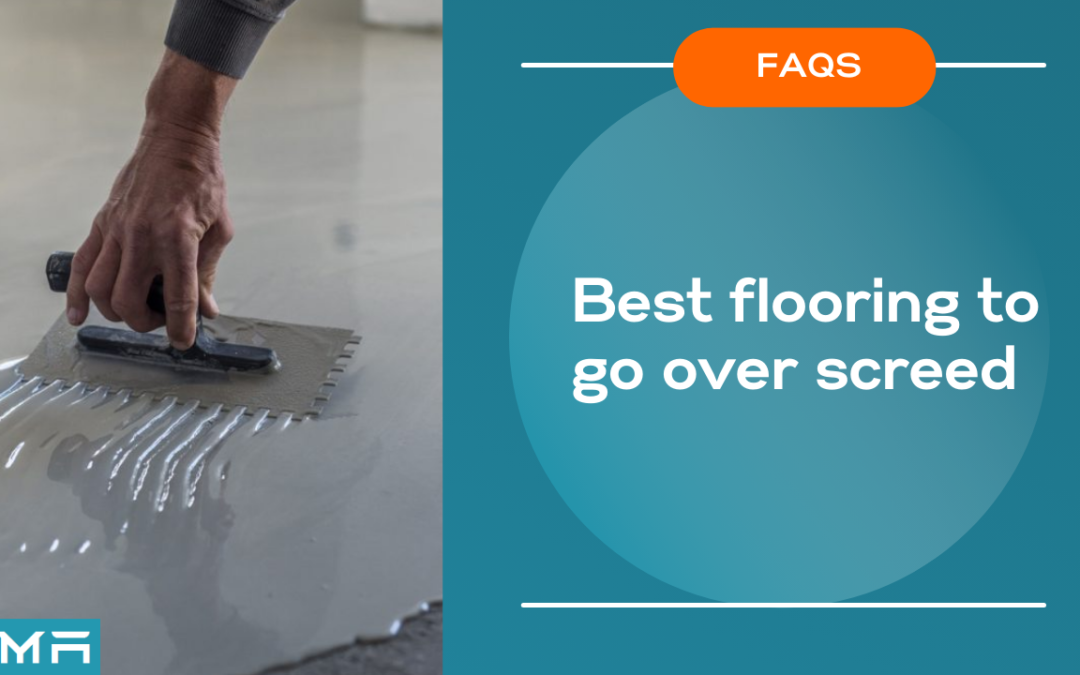
Screed provides a smooth, level base for many different types of floor finishes. Once the screed has fully cured, a wide range of flooring materials can be installed depending on the room, moisture levels, and how the space will be used.
Across London and the South East, screeded floors are commonly finished with tiles, wood, vinyl, or carpet in both residential and commercial properties.
Choosing the right flooring helps ensure durability, comfort, and long term performance.
Porcelain and ceramic tiles
Tiles are one of the most popular finishes for screeded floors. They work particularly well in kitchens, bathrooms, and hallways where durability and water resistance are important.
Screed provides a strong, stable base for tile adhesives, helping prevent movement that could lead to cracked grout or loose tiles.
Tiles are also an excellent option when underfloor heating is installed, as they transfer heat efficiently.
Engineered wood flooring
Engineered wood is another common choice over screed, especially in living areas and open plan spaces.
Unlike solid timber, engineered boards are more stable and less affected by temperature changes. This makes them suitable for installation over screeded floors, including those with underfloor heating systems.
Correct moisture testing is important before installing any wood flooring over screed.
Luxury vinyl flooring
Luxury vinyl tiles and planks are widely used over screed because they are durable, water resistant, and relatively easy to install.
Vinyl flooring works well in kitchens, bathrooms, and utility rooms. However, it requires a very smooth surface, so a thin layer of self levelling compound is sometimes applied before installation.
Carpet and carpet tiles
Carpet can also be installed over screed once the surface is fully dry and level. It is commonly used in bedrooms and living spaces where comfort and warmth are priorities.
Underlay is normally installed between the screed and the carpet to improve comfort and insulation.
Polished concrete or resin coatings
In some commercial spaces or modern residential designs, the screed itself may be coated with resin or polished finishes rather than covered with traditional flooring.
These systems create durable surfaces suitable for garages, workshops, or industrial environments.
Important considerations before installing flooring
Before installing any floor finish, the screed must be fully cured and moisture levels must be within acceptable limits. Installing flooring too early can trap moisture and lead to adhesive failure or floor movement.
Surface flatness is also important, particularly for vinyl or engineered wood. Minor imperfections can sometimes be corrected using a levelling compound.
If you are unsure which screed system is best for your flooring choice, our guide on liquid screed vs traditional screed explains how different screed types affect floor finishes.
If you are planning a flooring project in London or the South East and want a reliable screed base for your final floor finish, the LMA Floorscreeding team can help.
Visit our homepage to learn more about our services and contact us today!